18 July 2026
SENSING FORWARD
Encounters at the 30th International Focusing Conference
Vienna, 2-7th of June, 2026.
A month has passed since the International Focusing Conference in Vienna. I thought that would be enough time for the experience to settle. Instead, the encounters, conversations, and impressions are still very much alive in me, continuing to work within me even today.
The 30th International Focusing Conference was organized by The International Focusing Institute, TIFI, to mark the 100th anniversary of Gene Gendlin’s birth. It brought together 450 people from 35 countries across five continents. More than one hundred workshops and presentations took place throughout the week.
I love numbers, but here they do little more than convey the scale of the event. They pale beside the exciting, colourful, inspiring, moving, and almost impossible-to-sum-up richness of the week as a whole.
THE FIRST DAY
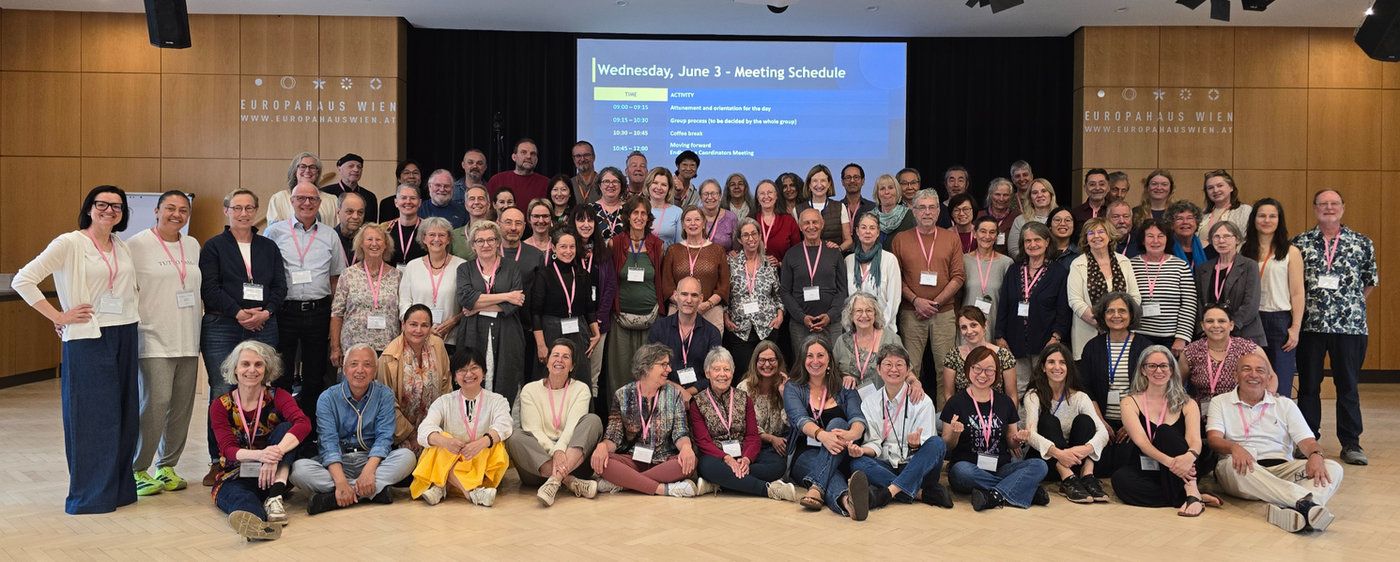
The first day had something of a pre-conference atmosphere: “only” 100 Coordinators from around the world were gathered together.
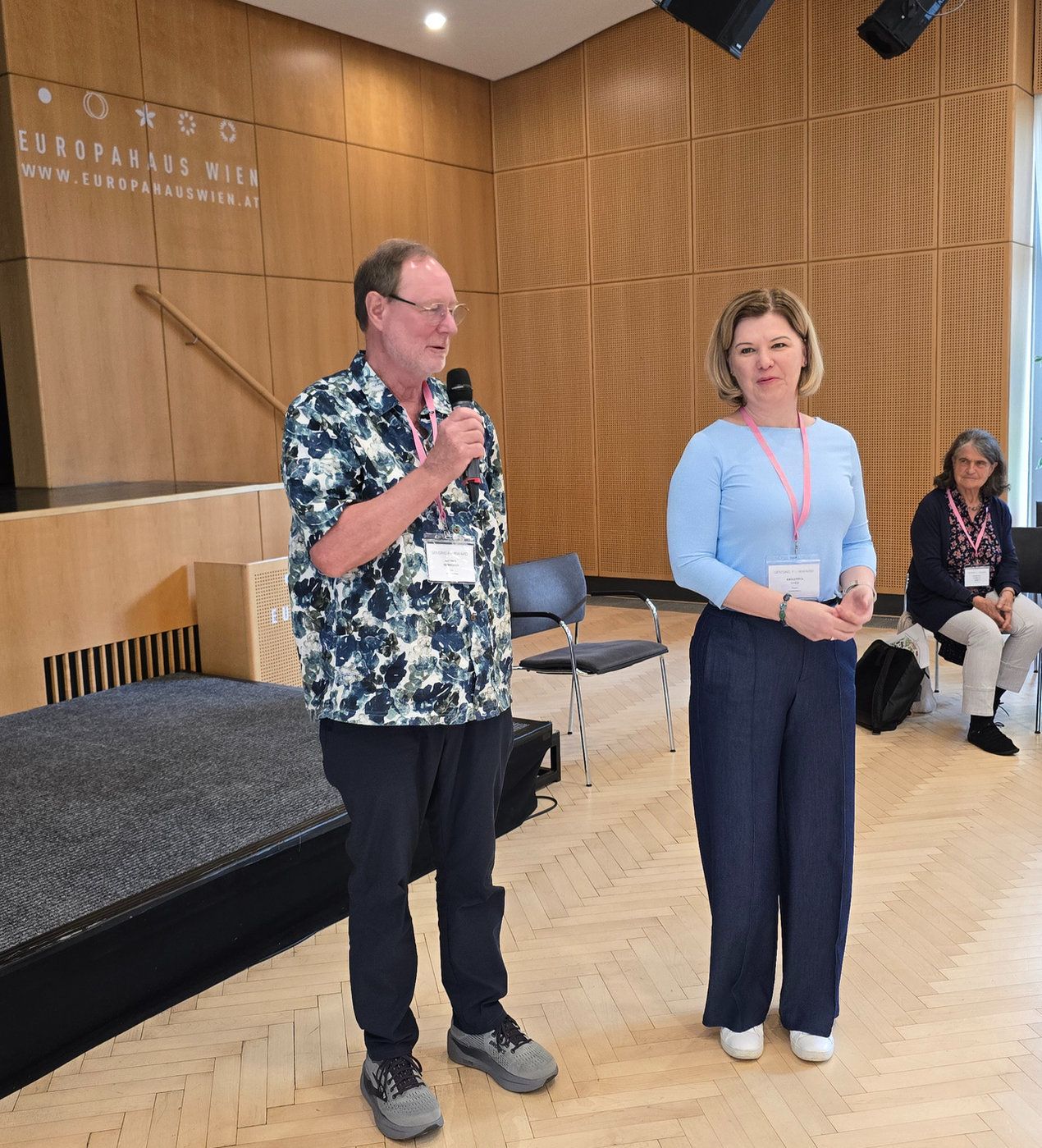
When I entered the conference room in the Europahaus, there were only two people I knew at all. At that point, I was still the only Hungarian there. I cannot say I felt particularly comfortable.
Speaking for the first time in English, in front of so many unfamiliar people, was a challenge. Then I discovered that it was something I could gradually get used to. In fact, I could even enjoy it.
What surprised me was how quickly the feeling of being among strangers disappeared. Not because everyone suddenly knew everyone else, but because in this environment, it felt natural to turn towards another person, to talk, to ask questions, and to listen.
We did not begin with presentations, as you might expect at a typical conference. After a short period of arriving and settling in, followed by introductions, we focused in pairs on what we are doing at the moment, what excites us in our work, where we need support, and where our energy is moving. It meant a great deal to me that Astrid happened to be my partner for the paired Focusing. She was one of the two people I already knew, and she is also one of my Supporting Coordinators.
In the afternoon, interest groups emerged from these conversations. We were not assigned to groups based on predetermined topics. Instead, we began with what moves us, what we wanted to bring into the shared space, and where we might want to go together.
Agathi Lakioti (Greece) and Jeffrey Morrison (USA) had planned and facilitated the day with such care and wholeheartedness that I gradually began to feel more and more at home in this large international community.
Perhaps this is what stayed with me most strongly. I rarely meet people who not only speak about attentiveness, and not only use it in their professional work, but also embody it in the way they are present with one another in everyday encounters.
Already during these first two days, I felt that even if this had been the whole conference, it would still have been more than enough for me.
ENCOUNTERS
It was deeply moving to meet Gerry Gendlin, Gene Gendlin’s son, at the gala dinner and to listen to him speak about his father. The person who emerged from his stories was not primarily the philosopher and creator of Focusing, but a simple, warm, and humble man who continued working and thinking almost until the end of his life, repeatedly revisiting and developing his own ideas.
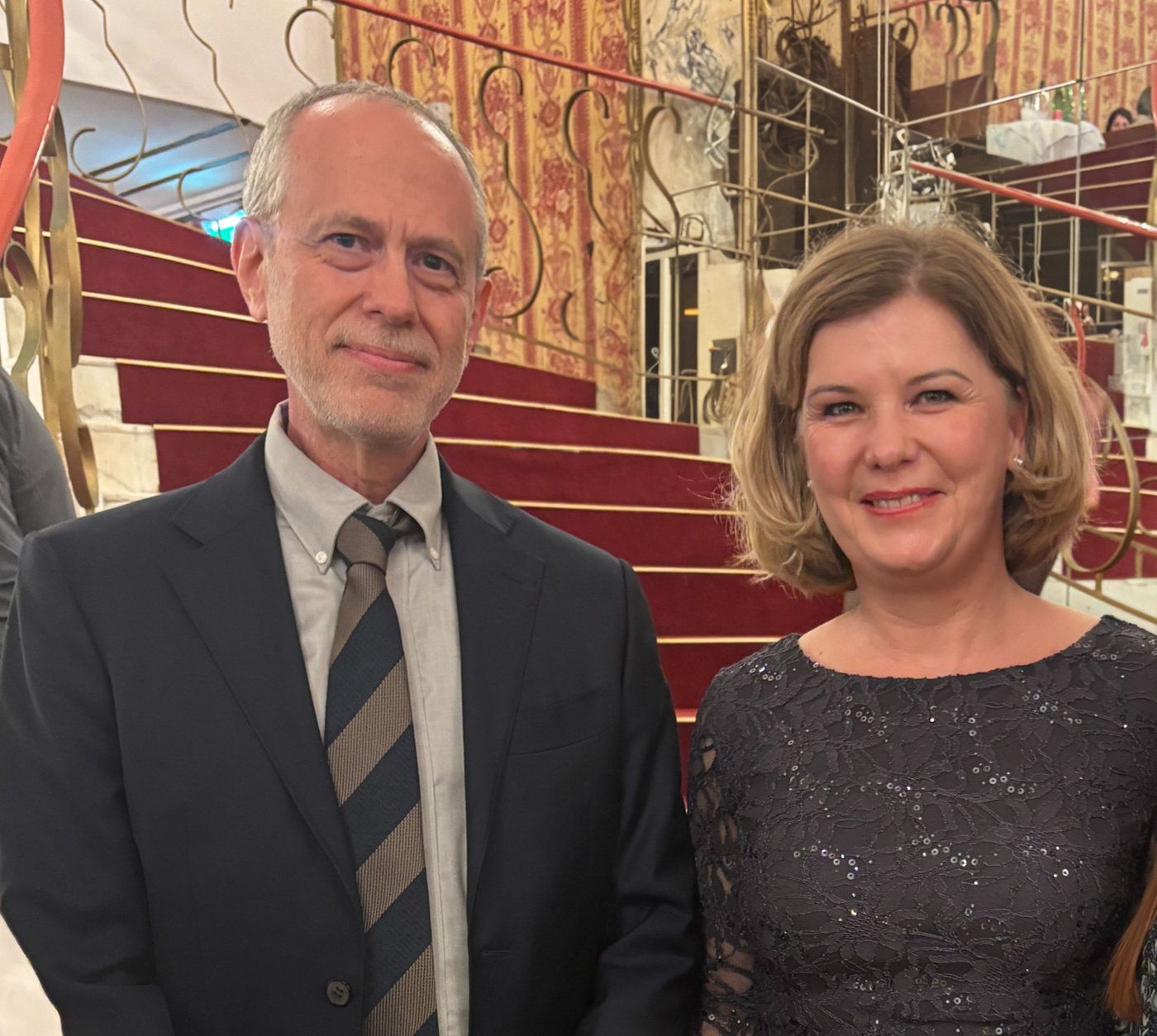
In his speech, Gerry said that what he misses most is being able to talk with his father about anything. Not only about personal matters, but about any idea that happened to come into his mind. He recalled, for example, a conversation he began by saying, “Tolstoy was wrong.” In his view, it is not happy families that resemble one another. Rather, the causes of unhappiness repeat themselves in predictably similar ways, while every happy family finds its own distinct path to happiness. After an hour of discussion, Gendlin had arrived at something like this: there is no such thing as a normal family; everyone is strange in their own way.
Gerry also spoke about how delighted his father would have been by what participants at the conference are doing with Focusing today. Gene Gendlin especially appreciated it when someone took Focusing into a new field, described it in different words, or gave it a new form within their own work. He did not want us to preserve what he had created unchanged. He wanted us to set out with it, carry it forward, and find our own ways of reaching even more people.
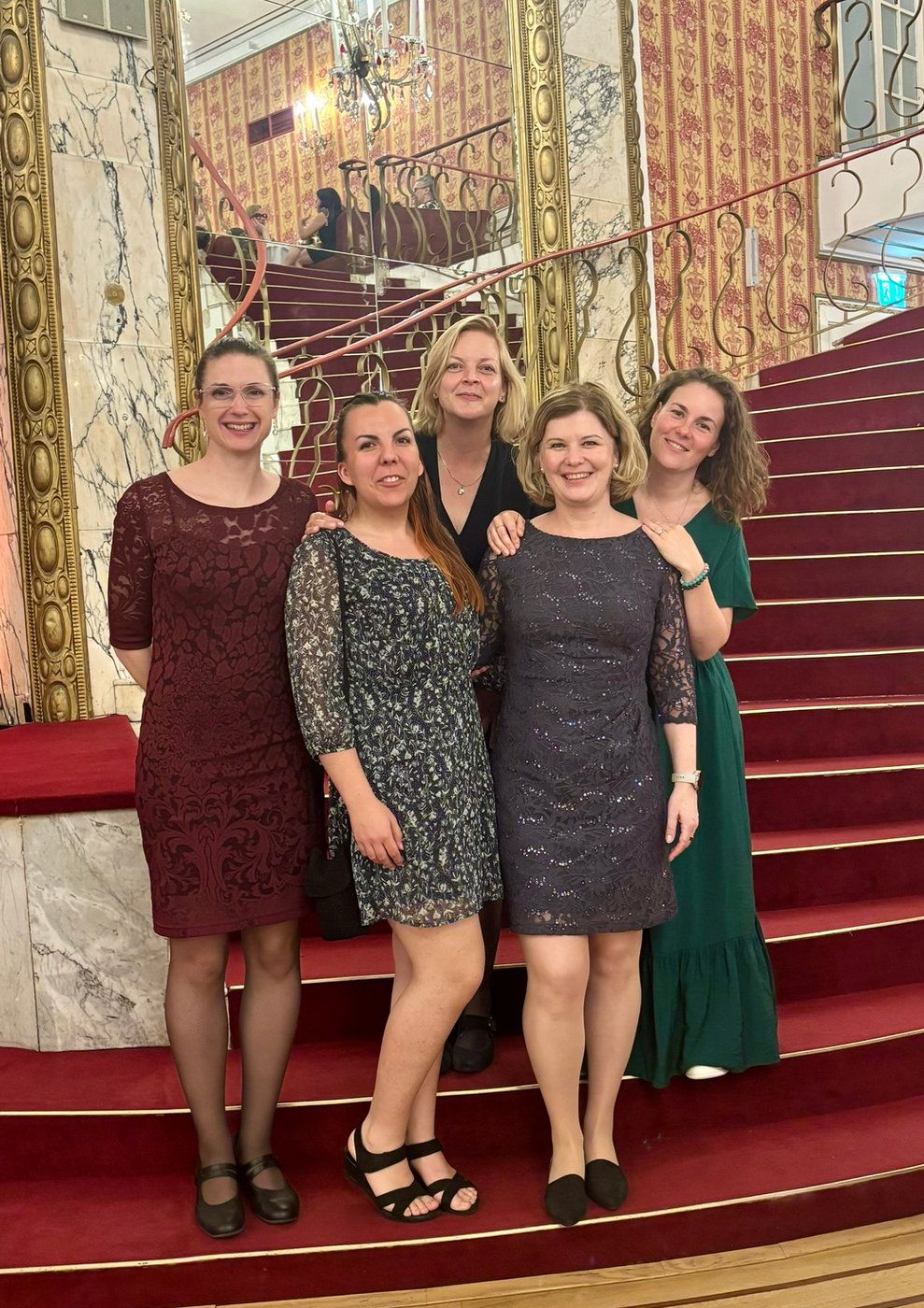
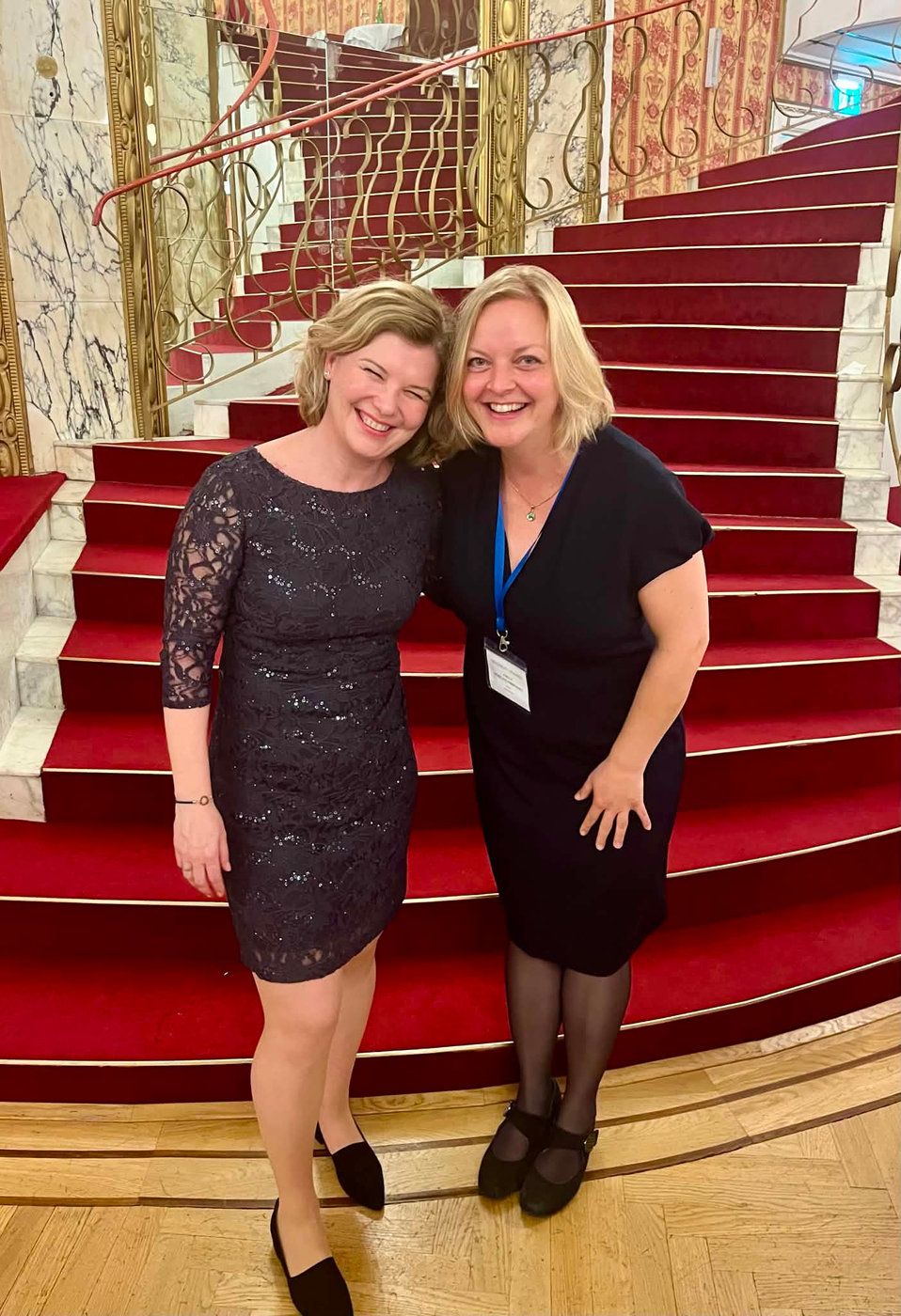
No account of the important encounters would be complete without mentioning that there were six of us from Hungary at the conference. It was good to have people to return to between workshops, to share what had happened to us, and to talk through experiences that were inspiring, surprising, or even unsettling. And now, a month later, I still feel that those few days changed our relationships in a lasting way.
MY OWN WORKSHOP - “EVERY NO CAN BE A DOORWAY”
Nearly twenty people from nine different countries took part in my workshop: Belgium, the Netherlands, Germany, the United States, China, Japan, Hong Kong, Israel, and Hungary.
Facilitating an experiential group on my own in English, when English was not the first language of most participants, was both a challenge and an uplifting experience.
At the beginning, I could still feel the nervousness in me. Would it work? Would everything I knew could work in my own language come across in English as well?
I invited the group to gather the different kinds of “No” they knew. The answers came one after another: a late No, a nameless No, a liberating No, a grieving No, and a No that was only just beginning to emerge.
As they began to voice their own “Nos,” one after another, I suddenly no longer saw an exercise being facilitated in a foreign language. They were in it. They were searching, experimenting, and recognizing their own experiences. And that helped me arrive, too.
Then they explored these different “Nos” through movement as well.
From that point on, I was no longer thinking about the fact that I was facilitating an international workshop in English. I was paying attention to what was happening in the group and to where the process itself wanted to go.
I felt: we are going to be all right.
Perhaps the strongest affirmation came when, even three days later, participants were still coming up to me and saying that the inner process that had begun during the workshop was continuing to unfold within them.
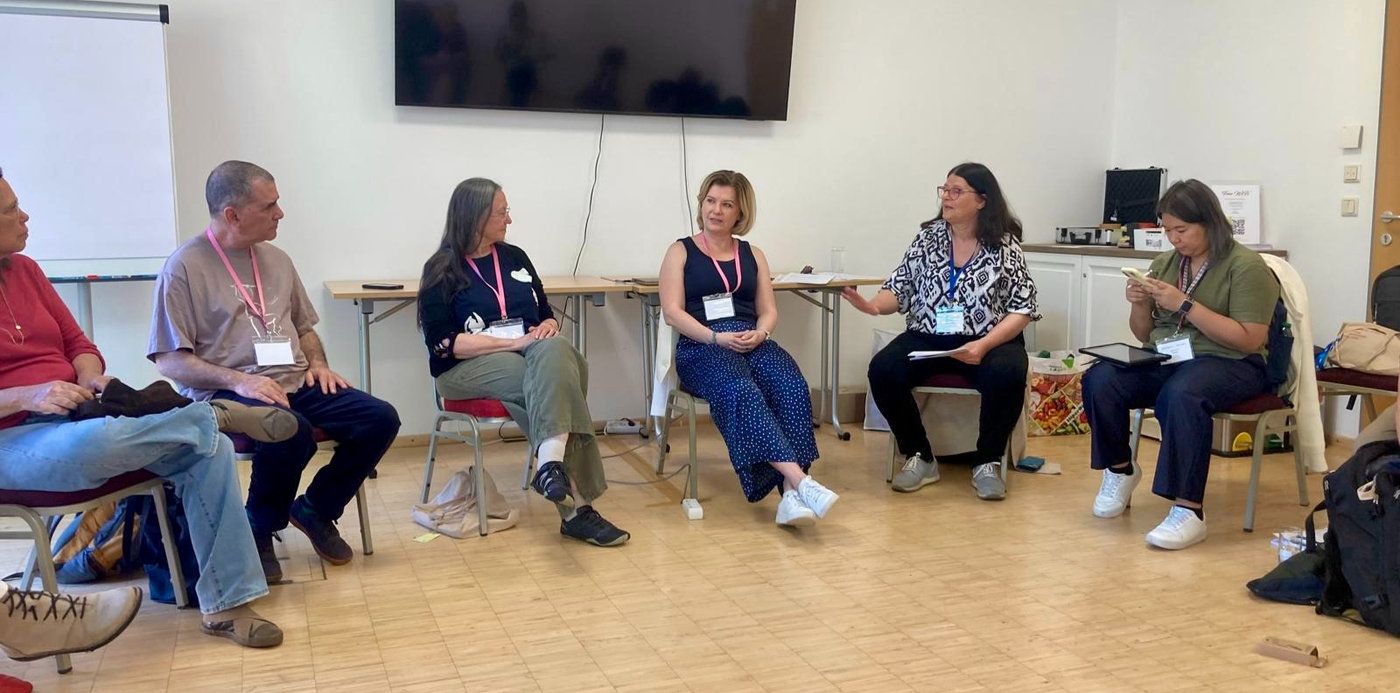
The photo was taken by Laura Bavalics, my Mentoring Coordinator, who held the space for me during the workshop so that I could hold the space for the group.
A DOOR TO THE WORLD
The programme included more than one hundred workshops on an extraordinary variety of topics. For me, however, it was not only this diversity that was exciting, but also the way several sessions opened up entirely new perspectives.
One example was Claude Missiaen’s workshop on Focusing-oriented supervision, which presented a very different approach from the one I am familiar with in Hungary. Annette Dubreuil explored the phenomenon of process skipping: how we do one thing in order to avoid feeling something else, and how Focusing can help us notice and recognise this as it happens. I was also deeply affected by an international panel in which five incredible people spoke about the history of Focusing and their own experiences, having known Gendlin personally and worked closely with him over many years.
Akira Ikemi’s presentation has also stayed with me. He explored the Japanese concept of BA, the relational space, and MUGA, or “no-self,” from the perspective of Focusing. I still often think about the different quality created when, in the Western way, I say, “I am thinking,” rather than expressing it in the Eastern way: “Thoughts are coming to me.”
The international space truly opened a door to the world for me. It felt as though fresh air had suddenly begun to flow in, casting many things in a different light.
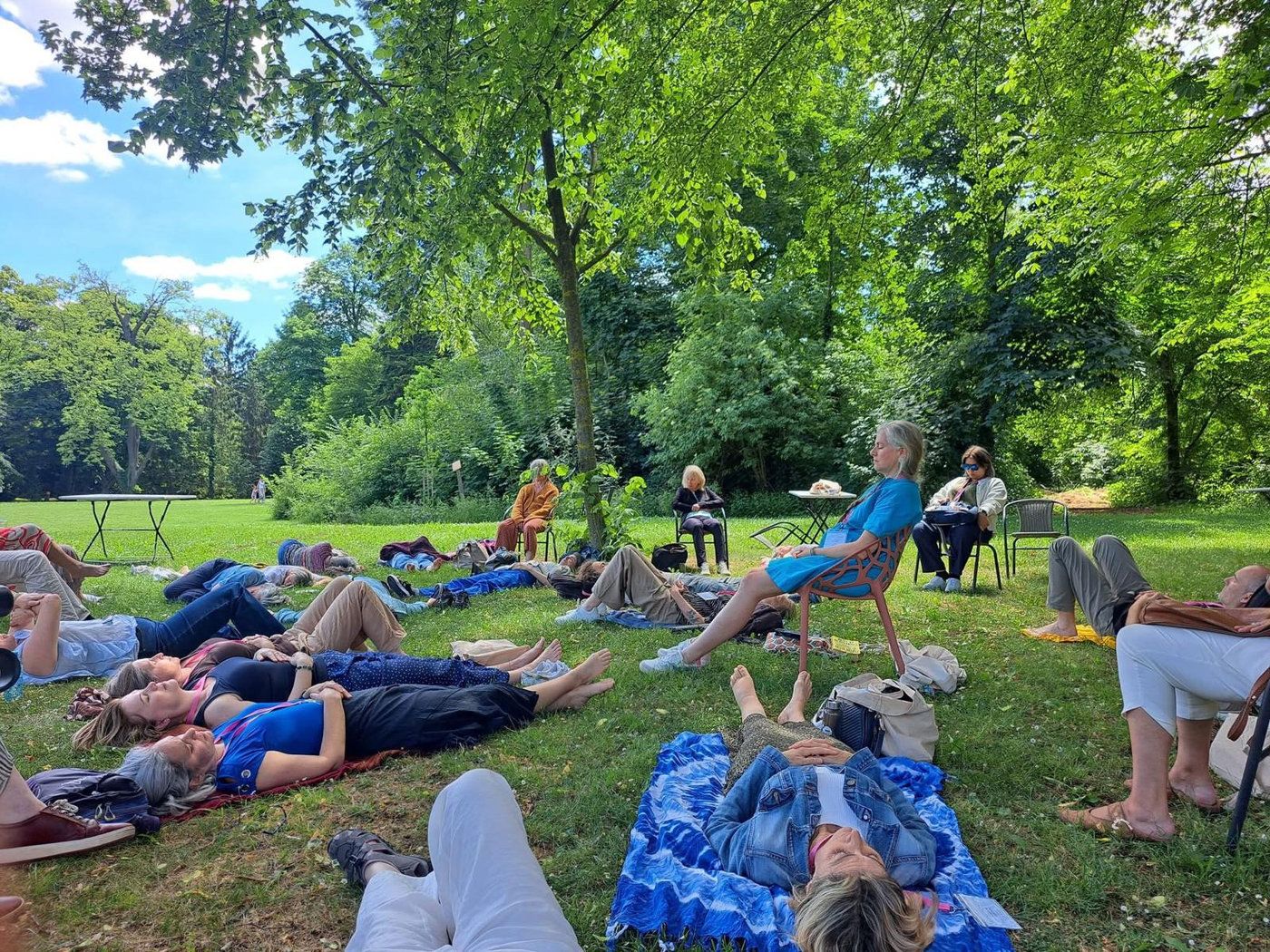
And of course, I wish everything could fit into this account. Joke Van Hoeck’s interest group, Rest in Resistance, for example, where in the middle of the conference we rested together, dozed, daydreamed, and simply did nothing. As we rested, Joke read passages from Tricia Hersey’s book Rest Is Resistance. One of its central ideas was that rest has value in itself, not only when it serves a purpose, such as making us more productive afterwards. For me, it was liberating in itself that there could be room for this at a professional conference.
It was a particular pleasure to share my blanket with Noga and Annette. Noga had come from Israel and Annette from Canada, and the three of us are among the newer members of the international Coordinator community.
AND REALITY COMES THROUGH THE DOOR TOO
During and after the conference, our conversations were not limited to easy topics. The conflicts of the wider world also found their way into our shared space, bringing painful questions to the surface.
What surprised me was not that conflict emerged, but how many people were committed to staying in relationship despite our differences. Not only to state our own truth, but also to try to listen to the other person all the way through.
A month later, this conversation is still continuing. Perhaps we have not come any closer to agreement. But perhaps we have learned a little more about how to remain together with questions that have no simple answers.
MORE TRUE ENCOUNTERS
And finally, I would like to share a small album of the people whom I did not simply meet, but with whom something truly came into being between us in the deeper sense of the word encounter, and who became important to me.
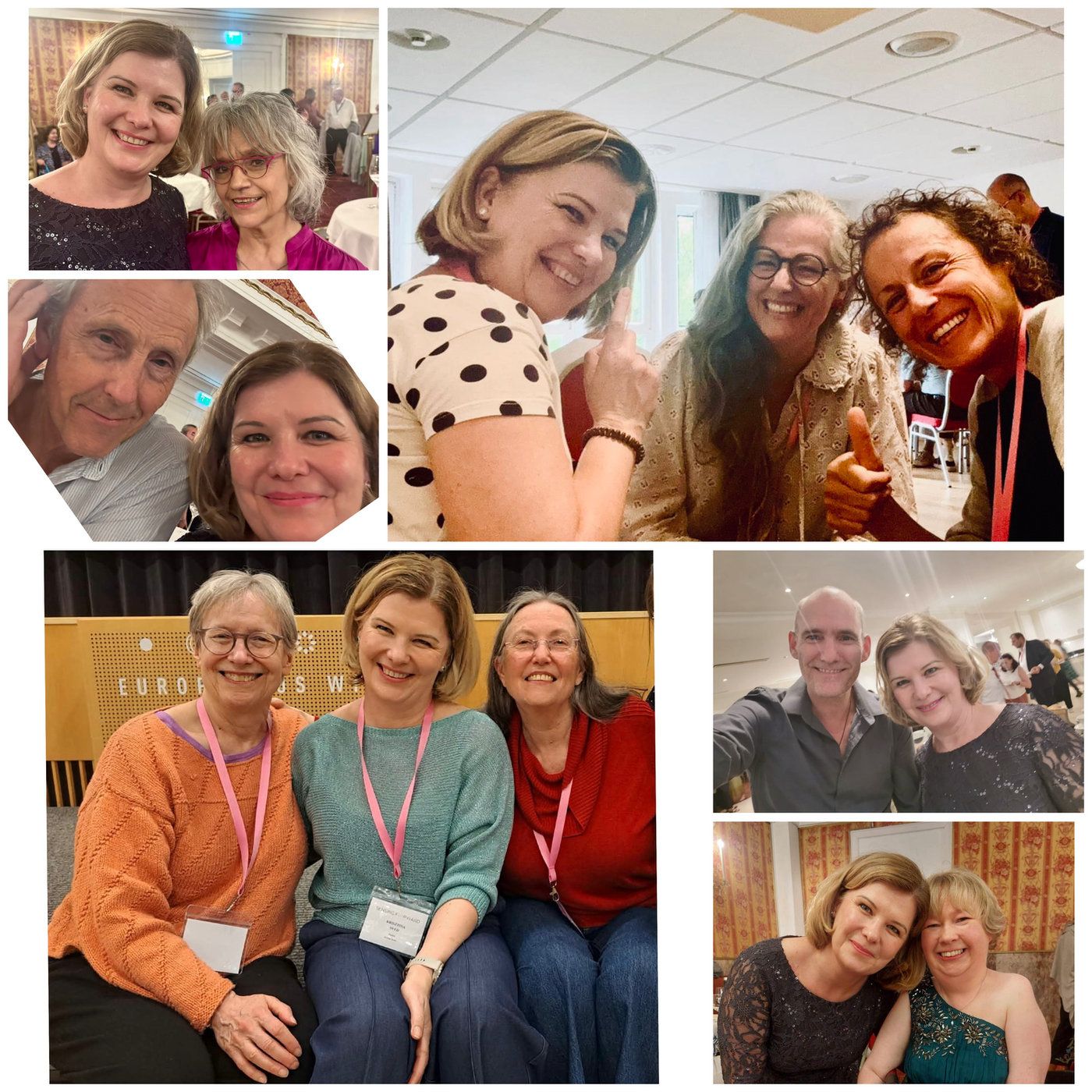
From top to bottom and left to right:
1.) Astrid Schillings (Germany), TIFI Coordinator, psychologist and psychotherapist, and one of the leading figures in Focusing with the Whole Body (Wholebody Focusing). She is one of my supporting Coordinators as I work towards becoming an international Coordinator. It means a great deal to me that she accompanies me on this path not only with her professional knowledge, but also with her presence.
2.) Peter Afford (United Kingdom), psychotherapist, TIFI Coordinator, and one of the leading thinkers exploring the relationship between Focusing and neuroscience. I have learned a great deal from him about how lived experience can be understood in relation to the functioning of the brain.
3.) Joke Van Hoeck (Belgium) and Ivana Grujić (Serbia/Luxembourg). Joke also belongs to the new generation of Coordinators-in-Training, Ivana is a Focusing Professional. During the workshop on peace (Sensing Peace Forward), an absolutely extraordinary energy suddenly burst into life between us. 😊
4.) Ann Weiser Cornell and Barbara McGavin (USA). Ann first met Gendlin in 1972 and later taught alongside him for several years. It was very special to meet them after learning from their work for so long and drawing on it in both my own practice and my teaching.
5.) Alexandre Jacquelin (France), Coordinator-in-Training and Focusing partner. He is one of those people with whom it was easy to form a genuine connection very quickly.
6.) Elaine Goggin (Ireland). I first came to know her as the attentive and dependable Zoom support person for TIFI programmes. She is also a Focusing Trainer and a Children Focusing Trainer. It was wonderful finally to meet her in person and to experience the same warmth and cheerfulness that she radiates online.
I deeply regret that so many other important encounters were not captured in photographs. I hope there will be another opportunity to make up for this. Until then, the felt sense of those encounters remains alive in me, even if they are not preserved in images, they remain vividly present in my memory.
And those who are not in the photos: my family, who were cheering me on with all their might on the day of my workshop and managed to cope with my being away even during the school term. Judit Pólya, one of my Supporting Coordinators, and Eszter Székelyné Kováts, who has been my supervisor for many years, my honorary Supporting Coordinator, and so much more to me.
FINAL REFLECTIONS
The conference was especially meaningful to me because it marked an important milestone on my path as a Coordinator-in-Training.
It is both inspiring and disorienting to discover how much there still is in the language and wider field of Focusing that I do not yet know, and yet find immensely exciting. There is so much still waiting to be explored. I hardly know where to begin...
It was a great honour to offer a workshop in this setting. But perhaps even more important was experiencing what it is like to belong to an international community where attentiveness, curiosity, and genuine human engagement are not only professional tools, but part of the natural language of everyday life.
Conference details
Conference venue: Europahaus, Vienna
Gala dinner: Parkhotel Schönbrunn, Vienna
Dates: 2–7 June 2026
Photo credits: The International Focusing Institute (TIFI) and my own photographs, used with the permission of everyone who appears in them.